
This twill shirt features fine dark blue stripes highlighted by a subtle diagonal pattern. The design brings visual rhythm without being too bold. The fabric feels light and fluid, while still ...


Shirt Measurements
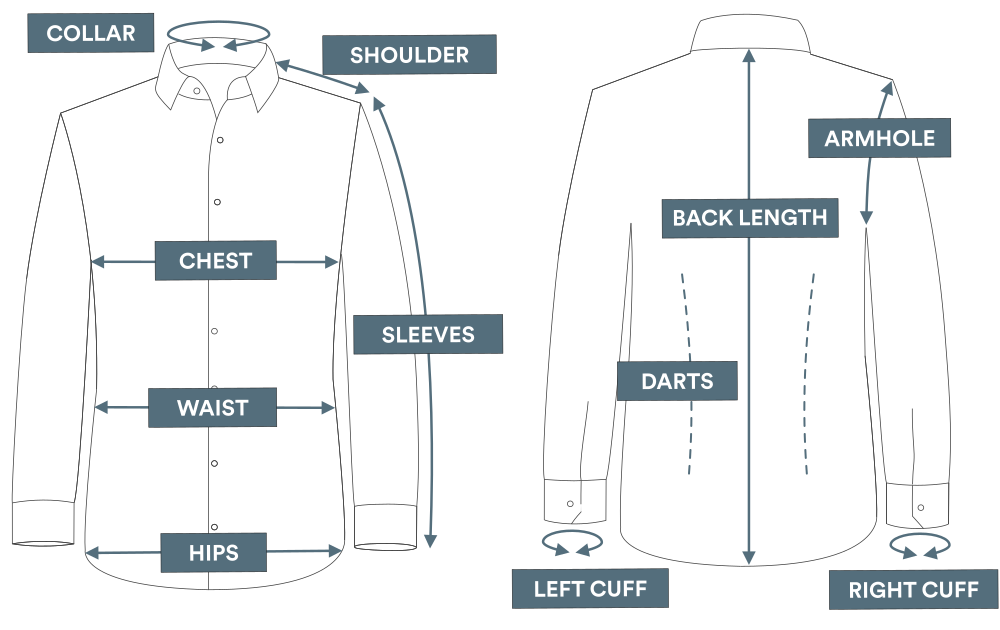
To ensure your shirt fits perfectly and flatters your figure, it is essential to understand the best practices for each measurement. This guide explains how to check the fit of your shirt and know when to add or remove a few centimetres. Each measurement plays an important role in your everyday comfort and appearance.
Collar (Neckline)
Your collar should close comfortably without tightening the neck. You should be able to fit two fingers on the side without difficulty. If the collar gapes at the sides or leaves too much space, it is too big. If the collar feels tight and leaves red marks on your neck, it is too small. The ideal fit allows for natural ease so that the shirt remains pleasant to wear all day, especially with a tie or a bow tie.

Learn more about adjusting the collar →
Chest
The chest width should offer good freedom of movement without creating an overly loose silhouette. By slightly pinching the fabric on the side under the armpits, you should not feel restricted when raising your arms. Small, light folds at the back of the armhole are normal and essential. If the fabric gapes excessively or creates marked folds across the pectorals, the chest is too wide. If, on the contrary, you feel tension at the buttons, the chest is too tight.

Learn more about adjusting the chest →
Waist
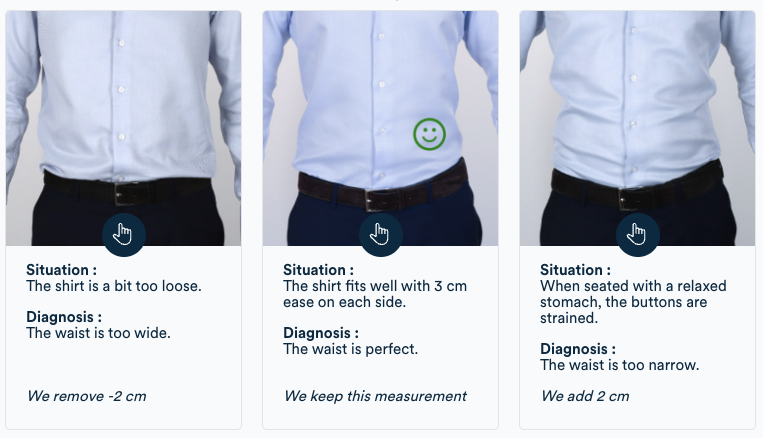
The waist should enhance your silhouette by creating a harmonious fit at the midsection, without crushing the body. By pinching the fabric at the fifth button, you should be able to form a three-centimeter fold without difficulty, or pass your closed fist under the shirt. The fit should not create an excessive "hourglass" effect that would look disproportionate. A shirt that is too tapered can become uncomfortable, while a shirt that is not tapered enough will have an unflattering drape.
Learn more about adjusting the waist →
Hips
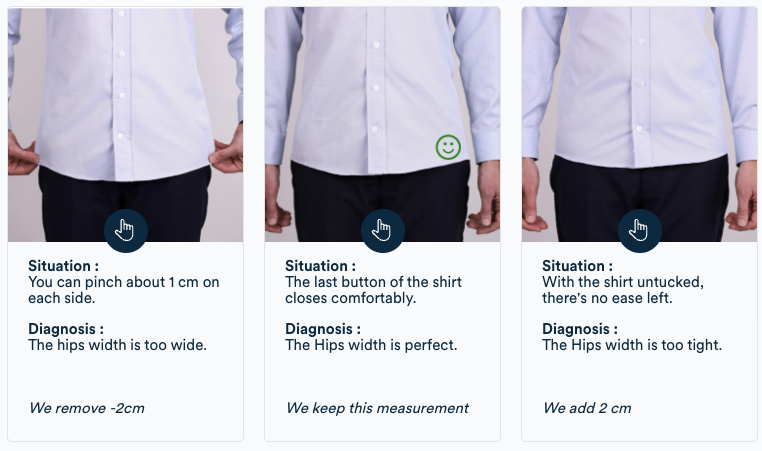
The hips section is the lowest width of the shirt. If you have wide hips or wear a thick belt, the hips must leave enough room to not pull. The hips should not create tension at the side seams when you are standing or sitting. For a shirt worn outside the trousers, the hips can be slightly looser for optimal comfort.
Learn more about adjusting the hips →
Shoulders
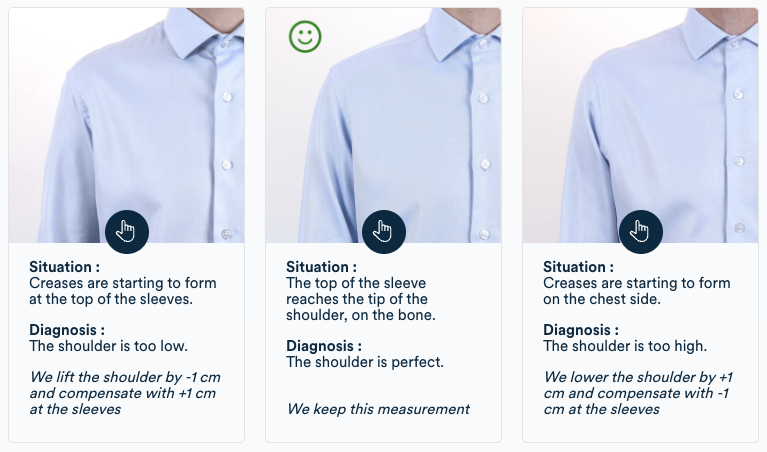
The shoulder seam should fall exactly at the point of the bone that forms the tip of the shoulder. If the seam is too far forward, it creates an unflattering narrow-shouldered effect. If the seam falls too far back, it creates unsightly folds at the bust and armhole. A well-fitted shoulder enhances your natural build and ensures the shirt drapes impeccably.
Learn more about adjusting the shoulders →
Sleeve Length
The sleeve length should arrive two centimeters above the base of the thumb when your arm is relaxed along the body. This length allows you to move your arms freely and wear a jacket without the shirt riding up. If you wear a tie or a blazer, the shirt cuff should extend about one centimeter beyond the sleeves of the outer garment. A sleeve that is too short exposes the wrist, while a sleeve that is too long creates a sloppy effect.
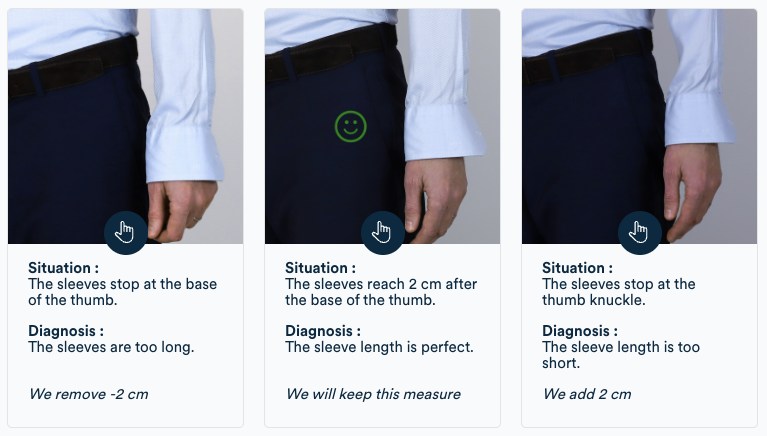
Learn more about adjusting sleeve length →
Armhole
The armhole is the opening for the arm and must allow complete freedom of movement. When raising your arms, you should not feel tension at the armhole seam. A slight excess of fabric at the back of the armhole is normal and necessary for this mobility. If you like shirts very fitted at the arms, the armhole can be slightly tighter. If you prefer comfort and get warm easily, a wider armhole allows better aeration.
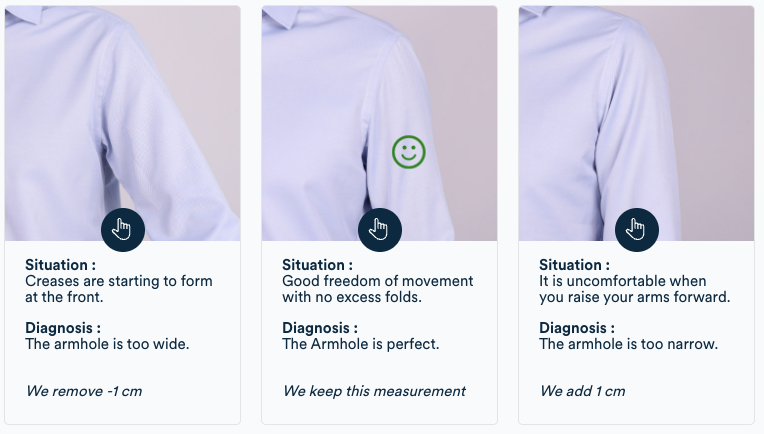
Learn more about adjusting the armhole →
Back length
| Man's height | Recommended length Formal shirt | Recommended length Casual shirt |
|---|---|---|
| 1.60 m | 72 cm | 69 cm |
| 1.65 m | 74 cm | 71 cm |
| 1.70 m | 76 cm | 73 cm |
| 1.75 m | 78 cm | 75 cm |
| 1.80 m | 80 cm | 77 cm |
| 1.85 m | 82 cm | 79 cm |
| 1.90 m | 84 cm | 81 cm |
| 1.95 m | 86 cm | 83 cm |
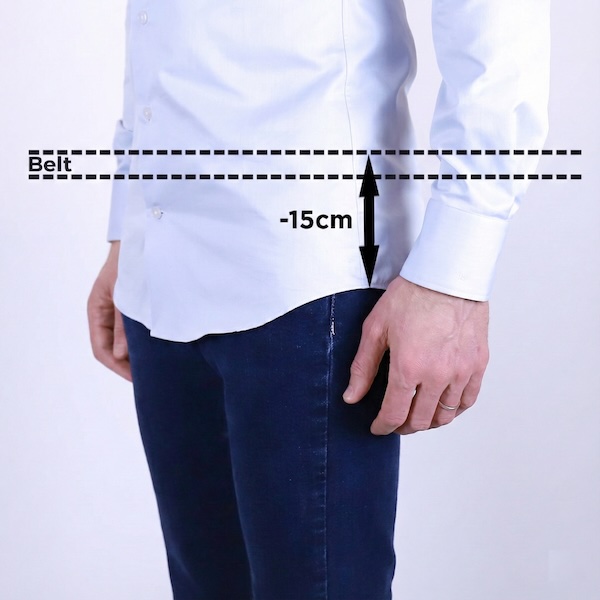
The back length depends on the use of the shirt. For a formal shirt worn inside the trousers, it must be long enough not to ride up during your movements and cover the buttocks almost entirely. On the side, the shirt extends about fifteen centimeters below the belt. For a casual shirt worn outside, it must hide the stomach but not have a "skirt" effect. On the side, it extends about eight centimeters below the belt.
Learn more about adjusting the back length →
Back Darts

Darts are seams in the back that help with the positioning of the shirt on the back. They are recommended for athletic men, V-shaped builds, or if you have a hollow back. Darts shift the side seams towards the back of the shirt.
Left / Right cuffs
The cuff must be tight enough so that the sleeve does not fall onto the hand, without being too tight. If you wear a watch, the cuff on the watch side must leave enough space to slip the cuff on without forcing. Generally, adding one centimeter on the watch side offers ideal ease. Good to know: If you tighten the cuffs too much, it may become more difficult to roll up the sleeve.
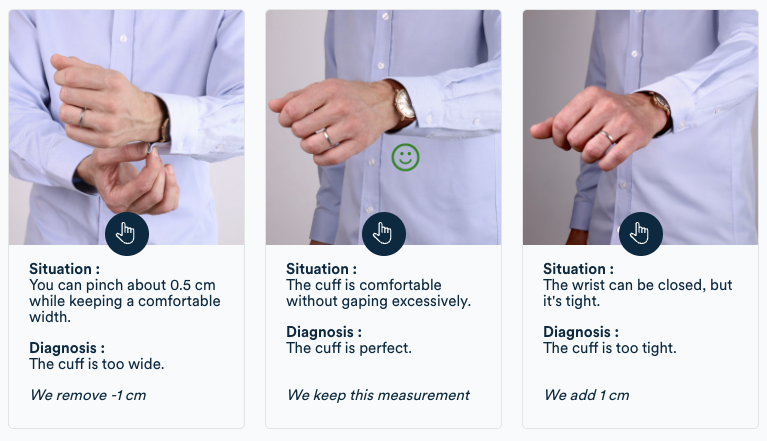
Learn more about adjusting cuffs →
Made-to-measure shirts
All LE CHEMISEUR® shirts can be easily adjusted to your body type. Enter your Weight, Size and Age and the AI will suggest a Fit in just a few clicks. Satisfied or Fit Guarantee.


Join "Le Club"!
Join "Le Club"!
Enjoy 5% back on all orders and receive the Newsletter.
Protected by reCAPTCHA.
Something went wrong, could you try again later?


Excellent customer service
4.7

100 day Fit Guarantee
Practical Information

LE CHEMISEUR® - 22 rue Notre Dame de Nazareth - 75003 Paris France
T&C & Legal Notice Cookie Preferences